
¿Qué se requiere para transformar una comunidad?
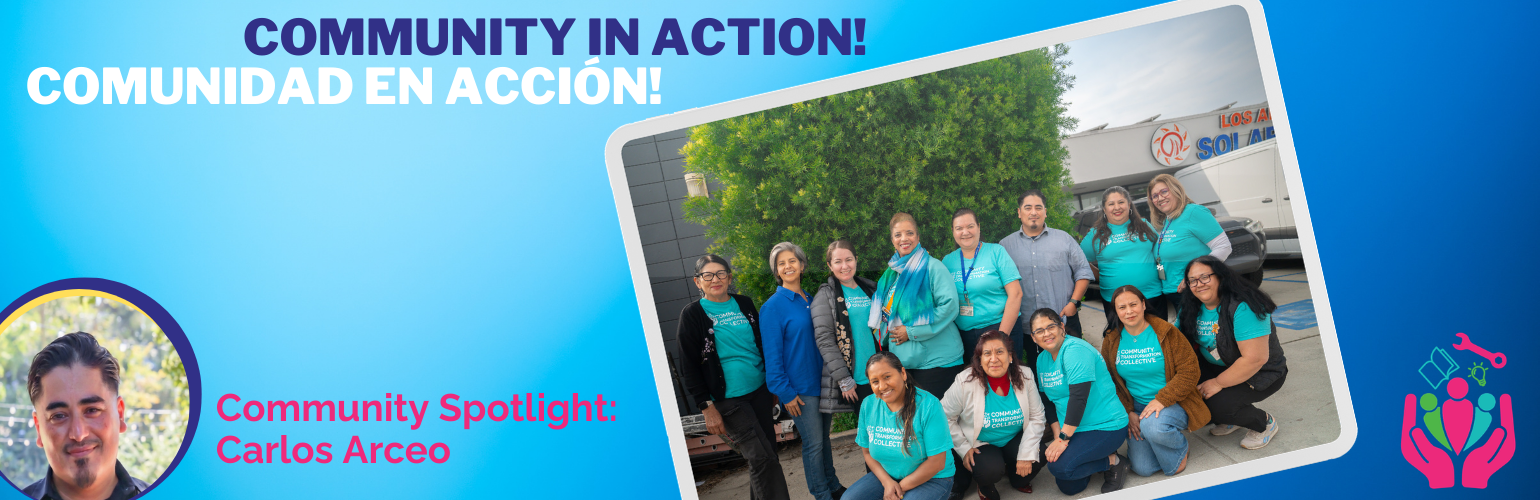
La serie Community Spotlight le presenta a los miembros dinámicos de la Colectiva de Transformación Comunitaria (CTC) que opera en Best Start Región 1 (BSR1). Estos miembros incluyen promotores y líderes comunitarios que construyen movimientos y crean cambios duraderos en sus comunidades. Estas historias describen su trayectoria personal al capacitarse, generar confianza y apalancar su liderazgo para encontrar nuevos caminos hacia el cambio para ellos mismos, sus familias y sus comunidades.
Presentamos a Carlos Arceo - Orígenes de Conciencia
Como niño, Carlos escuchó conversaciones susurradas sobre papeles - documentos que todavía no entendía pero que sentía que tenían importancia. La palabra estaba presente en su hogar como una advertencia. La sentía antes que la entendía. Sus padres eran inmigrantes. Indocumentados. Y esa diferencia formó su idea del mundo en maneras tanto calladas como profundas.
Una de sus primeras memorias de esa diferencia surgió durante un viaje a México. Su abuelo estaba enfermo y sus padres querían que él y su hermana lo fueran a ver, por si acaso fuera la última vez. Viajaron con sus tías. Sus padres se quedaron para atrás, y no los acompañaron. Carlos no entendía por qué. Sólo entendía el dolor de extrañarlos, la confusión de su ausencia.
Años después, cuando su abuelo se enfermó de nuevo, su padre sí fue - pero cuando llegó el momento de regresar, su padre no regresó con ellos. Los niños en su complejo de apartamentos hicieron preguntas. ¿Dónde está tu papá? ¿Por qué no regresó? Sin saber las reglas, Carlos les contestó honestamente. Es que no tiene papeles.
Esa noche su mamá le habló en privado. “Mijo, no decimos eso en voz alta.” No explicó mucho - sólo que era complicado. Pero algo ya se le había arraigado: una mezcla de curiosidad, temor y resentimiento. No hacia sus padres, sino hacia un sistema que podía separar a las familias tan fácilmente. Ese momento aclaró algo para él - se podían percibir a las personas de manera distinta, y por eso, se las podría tratar de manera diferente y hasta ser dañado. Y con eso, nunca estuvo de acuerdo.
Aprovechando la Experiencia de Diferencias
Las diferencias aparecían en todos lados. En restaurantes de comida rápida cuando su padre luchaba por ordenar con su inglés limitado. En llamadas de teléfono con una compañía de servicios públicos. En las oficinas del doctor. Como muchos hijos de inmigrantes, Carlos se hizo traductor, negociante, defensor - mucho antes que tuvo el lenguaje para estos roles. Él era niño y entendía que no era justo. Pero también sabía que alguien lo tenía que hacer, que las familias se ayudaban.
La responsabilidad le dio forma. Aunque no era justo que un niño cargara tal peso, le enseñó la importancia de la inclusión, empatía y protección. Le enseñó a acoplarse con incomodidad y seguir hacia adelante. Y lo más importante que le enseñó fue que los sistemas, y no necesariamente la gente, eran el problema.
Tal conciencia le siguió hasta ser adulto y hasta su trabajo con la Colectiva de Transformación Comunitaria (CTC). Lo que una vez parecía ser algo personal, se convirtió en algo político. Dejó de preguntar lo que sus padres habían hecho mal y empezó a preguntar por qué los sistemas se habían estructurado para darles la desventaja - y a muchos más. Esto se convirtió en la labor de su vida: aprovechar y utilizar su acceso, su privilegio, y su poder para ayudar a otras personas a encontrar lo suyo. “Pienso que mi temprano sentido de responsabilidad estaba conectado con las personas que me importaban directamente, a diferencia de ahora. Ahora me baso en cómo demuestro que me importan personas que tal vez nunca voy a conocer. Y pienso que esa es una diferencia clave”.
El poder de la Comunidad
En CTC, esa creencia toma vida mediante asociación y colaboración. Los miembros de la comunidad no solo participan - son líderes. Diseñan, facilitan, abogan. Ya sea el trabajo de la abogacía de vivienda con SAJE (Strategic Actions for a Just Economy (Acciones estratégicas para una economía justa) o juntas con funcionarios electos, la meta siempre es la misma: construir poder que dure más allá que un proyecto o una persona.
Lo que hace que Carlos siga adelante no es un título ni una métrica. Es la gente. Los miembros de la comunidad. El equipo. La resistencia silenciosa de estar presente todos los días y rehusar no hacer nada. “Eso es lo que hacemos aquí en CTC. Usamos los principios de solidaridad en colaboración con los miembros de la comunidad para que puedan encontrar su poder y utilizarla para beneficiarse ellos mismos y sus comunidades”.
Cuando imagina el éxito no imagina elogios. Imagina un futuro en el que los miembros de la comunidad están a cargo - donde el personal es diferente, el liderazgo es diferente y el temor ha sido reemplazado por la facilidad. Un futuro en el que la gente no se da cuenta del cambio positivo porque está demasiado ocupada en vivirlo.
Y un día, tal vez, alguien dirá, ¿Recuerden cuando antes era así? Y será un recuerdo - no la realidad.
Esto es lo que Carlos se está esforzando por lograr. “Tengo un impacto con mi ecosistema nuclear de familiares y amigos y pienso que, mediante mi trabajo, tengo la oportunidad de hacerlo de manera exponencial y hacerlo junto con otras personas. Juntos en comunidad”.
¿Qué es la Colectiva de Transformación Comunitaria?
Best Start Región 1 (BSR1) es un movimiento de construcción comunitaria basado en el lugar, compuesto por más de 1.000 residentes de la comunidad y organizaciones socios intersectoriales que trabajan juntos para efectuar cambios en su región. Con una inversión inicial de First 5 LA, esta región incluye las comunidades del Este de Los Ángeles, Metro Los Ángeles, Sur El Monte/El Monte y el Sureste de Los Ángeles.
La Colectiva de Transformación Comunitaria (CTC) dentro de Para Los Niños guía a BSR1. La CTC apoya a los miembros de la comunidad para transformar las condiciones sistémicas para que los niños, las familias y los vecindarios puedan prosperar. Esta estrategia de cambio de sistemas fortalece y cultiva colaboraciones transformadoras en la región para diseñar juntos, implementar, comunicar, movilizar y evaluar estrategias.
What does it take to transform a community?
The Community Spotlight series introduces you to the vibrant Community Transformation Collective (CTC) members operating in Best Start Region 1 (BSR1). These members include community leaders and promoters who build movements and create lasting change in their communities. These stories describe their personal journey as they develop skills, build confidence, and leverage their leadership to find new pathways to change for themselves, their families, and their communities.
Meet Carlos Arceo - Origins of Awareness
As a child, Carlos heard whispered conversations about papeles - documents he didn’t yet understand but somehow knew carried weight. The word floated through his home like a warning. He felt it before he understood it. His parents were immigrants. Undocumented. And that difference shaped his view of the world in ways both quiet and profound.
One of his earliest memories of that difference came during a trip to Mexico. His grandfather was ill, and his parents wanted him and his sister to see him, just in case it was the last time. They traveled with their aunts. Their parents stayed behind. Carlos didn’t understand why. He only knew the ache of missing them, the confusion of absence.
Years later, when his grandfather fell ill again, his father did go - but when it was time to return home, his father didn’t come back with them. Kids in the apartment complex asked questions. Where’s your dad? Why didn't he come back? Without knowing the rules, Carlos answered honestly. Es que no tiene papeles - it’s because he doesn’t have papers.
That night, his mother pulled him aside. “Mijo, we don’t say that out loud.” She didn’t explain much - only that it was complicated. But something had already taken root: a mix of curiosity, fear, and resentment. Not toward his parents, but toward a system that could separate families so easily. That moment clarified something for him - people could be perceived differently, and because of that, treated differently and even harmed. And he was never okay with that.
Leveraging the Experience of Differences
Differences showed up everywhere. At fast food restaurant counters where his father struggled to order. On phone calls with a utility company. At doctor’s offices. Like many children of immigrants, Carlos became the translator, the negotiator, the advocate - long before he had language for these roles. He was a kid, and he understood it wasn’t fair. But he also knew someone had to do it, that families helped each other.
The responsibility shaped him. Although unfair for a child to bear that burden, it taught him inclusion, empathy, and protection. It taught him how to sit with discomfort and move anyway. Most importantly, it taught him that systems - not necessarily people - were often the problem.
That awareness filled into adulthood and into his work at the Community Transformation Collective (CTC). What once felt personal became political. He stopped asking what his parents had done wrong and started asking why systems were structured to disadvantage them - and so many others. This became his life’s work: leveraging his access, his privilege, his power to help others find theirs. “I think my early sense of responsibility was very connected to the people I cared about directly versus now. Now it is based on how I care about people that I may never even meet. And I think that's a key difference”
The Power of Community
At CTC, that belief comes alive through partnership and collaboration. Community members don’t just participate - they lead. They design, facilitate, advocate. Whether it’s housing justice work with SAJE (Strategic Actions for a Just Economy) or convenings with elected officials, the goal is always the same: build power that lasts beyond any one project or person.
What keeps Carlos going isn' t a title or a metric. It’s the people. The community members. The team. The quiet resistance of showing up every day and refusing to do nothing. “That's what we do here at CTC. We take the principles of solidarity and we partner with community members so that they can find their power, step into it for themselves and for their communities.”
When he imagines success, he doesn’t picture accolades. He imagines a future where community members have taken the reins - where staff looks different, leadership looks different, and fear has been replaced with ease. A future where people don’t notice positive change because they are too busy living it.
And one day, maybe, someone will say, remember when it used to be like that? And it will be a memory - not a reality.
This is what Carlos is working toward. “I'm impactful with my nuclear ecosystem of family members and friends, and I think through my work, I have an opportunity to make that exponential and to do it alongside others, together in community.”
What is the Community Transformation Collective?
Best Start Region 1 (BSR1) is a place-based, community-building movement made up of over 1,000 community residents and cross-sector organizational partners who work together to affect change in their region. With an initial investment from First 5 LA, this region includes the communities of East Los Angeles, Metro Los Angeles, South El Monte/El Monte, and Southeast Los Angeles.
BSR1 is driven by the Community Transformation Collective (CTC) within Para Los Niños. The CTC supports community members to transform systemic conditions so that children, families, and neighborhoods can thrive. Our systems change approach builds and cultivates transformational partnerships for the region to co-design, implement, communicate, mobilize, and evaluate strategies.